Is It Possible to Make Renewable Energy Truly Sustainable? ♻️
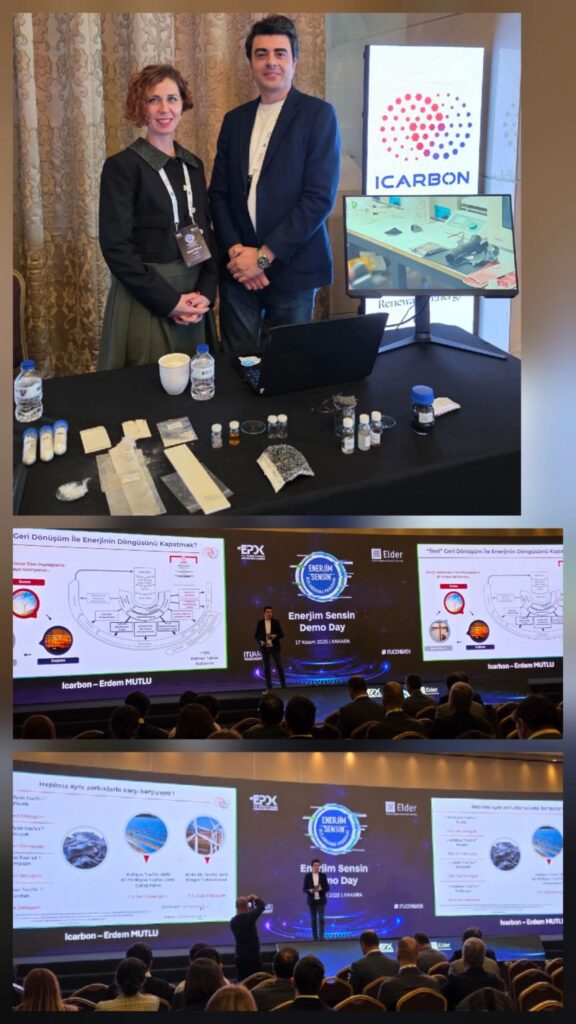
At the #EnerjimSensin stage, we had the opportunity to share our perspective directly with leading representatives of the energy sector by demonstrating real applications of ICARBON’s depolymerization technologies for renewable energy waste streams.
This time, we presented ICARBON’s advanced recycling and depolymerization solutions for renewable energy technologies such as wind turbines and solar panels.
📍The first generation of renewable energy systems in the European Union is approaching the end of its operational lifetime. Considering component degradation and environmental risks, both wind turbines and solar panels typically have an average lifespan of 20–25 years.
Although reusing and recycling these systems can provide major economic and environmental benefits, recycling them remains technically challenging.
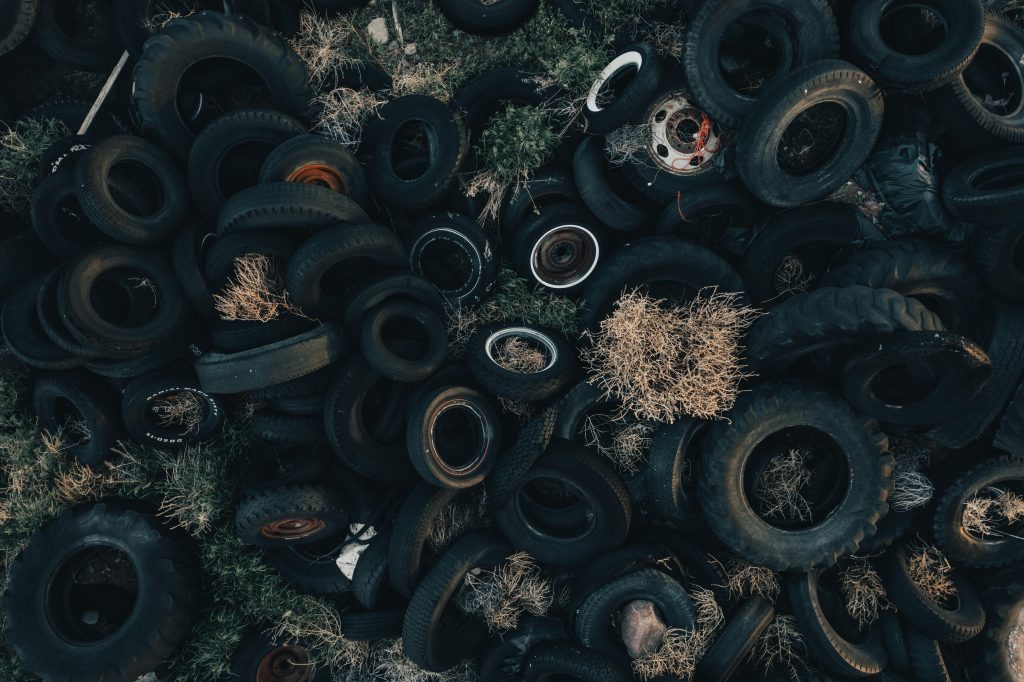
♻️When these technologies reach the end of their lifecycle, they also create entirely new waste streams for the planet.
Can today’s recycling technologies effectively manage these emerging waste challenges?
This question will become one of the most discussed topics over the next 1–5 years — and one of the strongest answers lies in depolymerization technologies.
📍One of the International Energy Agency’s “Net Zero 2050” targets is for wind and solar energy to generate nearly 70% of global electricity by 2050.
📍However, achieving such an energy transformation is threatened by supply risks related to critical materials and recycling limitations. Recent reports increasingly highlight that the growing waste volumes generated by renewable energy systems could create significant environmental and economic burdens for future generations.
Several European Union initiatives and projects are already working to overcome these challenges. When we examine these projects closely, one of the most prominent technologies being explored is exactly what ICARBON is developing: advanced depolymerization technologies.
📍Processing green technology waste requires significantly more recycling capacity and more advanced material recovery techniques. In addition, comprehensive data regarding material stocks within these waste streams is still insufficient.
📍Today, many waste facilities in Europe still burn portions of photovoltaic solar panels that contain valuable elements such as silver, copper, and silicon. Wind turbine blades, on the other hand, are still largely landfilled.
📍Every megawatt of wind power capacity generates approximately 1 ton of composite blade waste. Global projections estimate that waste wind turbine blades could reach 43 million tons by 2050, while solar panel e-waste could grow to between 60 and 78 million tons.
The lack of efficient recycling and resource recovery pathways represents one of the biggest bottlenecks for the sustainable growth of the renewable energy industry.
At ICARBON CHEMICAL R&D AND ENGINEERING, we continue developing advanced recycling, depolymerization, and circular economy solutions to support the sustainable future of renewable energy technologies.
#RenewableEnergy #AdvancedRecycling #Depolymerization #CircularEconomy #Sustainability #SolarPanelRecycling #WindTurbineRecycling #GreenTechnology #ChemicalRecycling #EnergyTransition #NetZero #WasteManagement #SustainableMaterials #Innovation #ICARBON