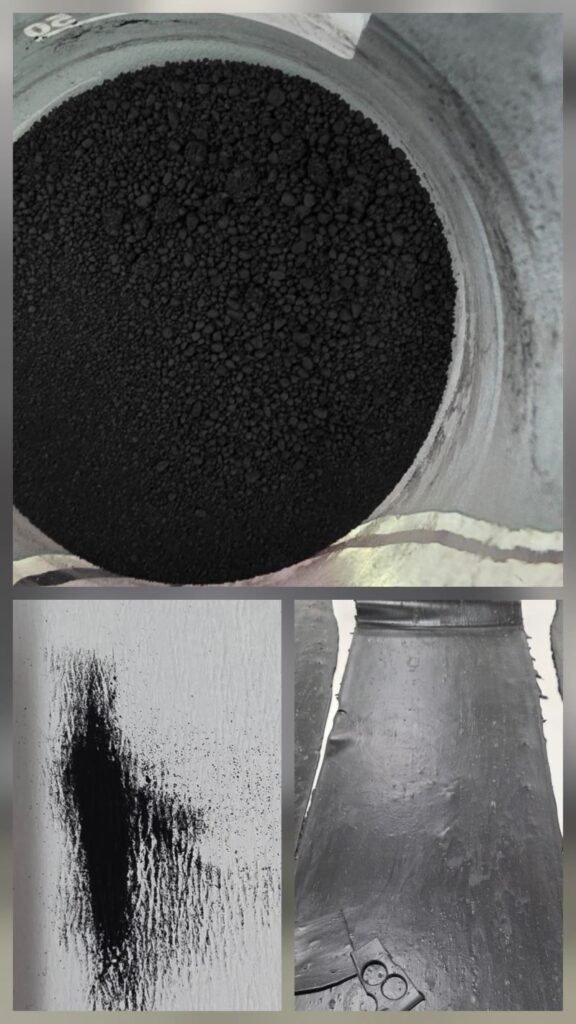
With the newly published standard, Recovered carbon black (rCB) is no longer considered an “alternative solution,” but is becoming a clearly defined engineering materiAL carbon black (rCB) is no longer just an “alternative solution,” but is transforming into a clearly defined engineering material. The new ASTM D8632-25 standard takes the use of rCB in the rubber industry to a higher level, focusing on transparency and sustainability.
♻️We are ready to support you with the different types of rCB we have developed…
📍Why is this standard so important? rCB products will now be identified with “R” codes (Toluene Transmittance and Inorganic Content classes).
The “R-Code” classification logic uses a matrix structure based on two basic parameters.
📍Toluene Transmittance: Indicates the quality of the pyrolysis process and the amount of organic residue on the material. 📍Inorganic Content: Determines the amount of ash and minerals from the raw material (old tires, etc.).
Example: An rCB with 82% toluene permeability and 22% inorganic content is classified as R23. This means it’s of medium-low quality. 📍We can share technical information regarding the classification with interested parties. ♻️
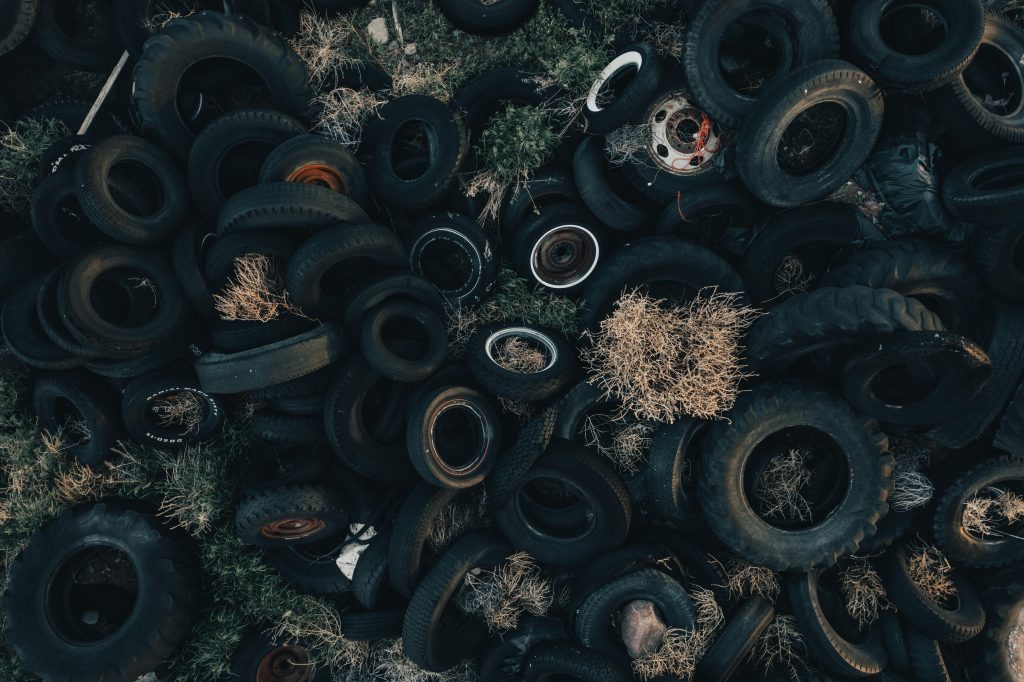
The new standard means fair competition for manufacturers and reliable supply for users. The transformation of waste tires and rubbers into valuable raw materials will now be discussed in an international language.
Clarifying inorganic content and pyrolysis quality allows us to optimize the reinforcement performance in rubber formulations.
The rCB market is projected to grow at an annual rate of 36% by 2026. ICARBON CHEMICAL R&D AND ENGINEERING is ready to support you in achieving full circularity in the rubber industry. If you would like to contact us…